
Lafayette Parish Criminal Court Records
A criminal court record is the court case file, not the arrest event by itself. In Lafayette Parish, district criminal case records are tied to the 15th Judicial District Court and the Lafayette Parish Clerk of Court. The Clerk's online-records material says criminal and traffic records may show offense date, charge filed, case history, service, minutes, and disposition. The Clerk criminal records department is the better channel for certified court records than a jail roster or a general web search.
The Lafayette Parish Clerk criminal records page is the source lead-in for the image below.
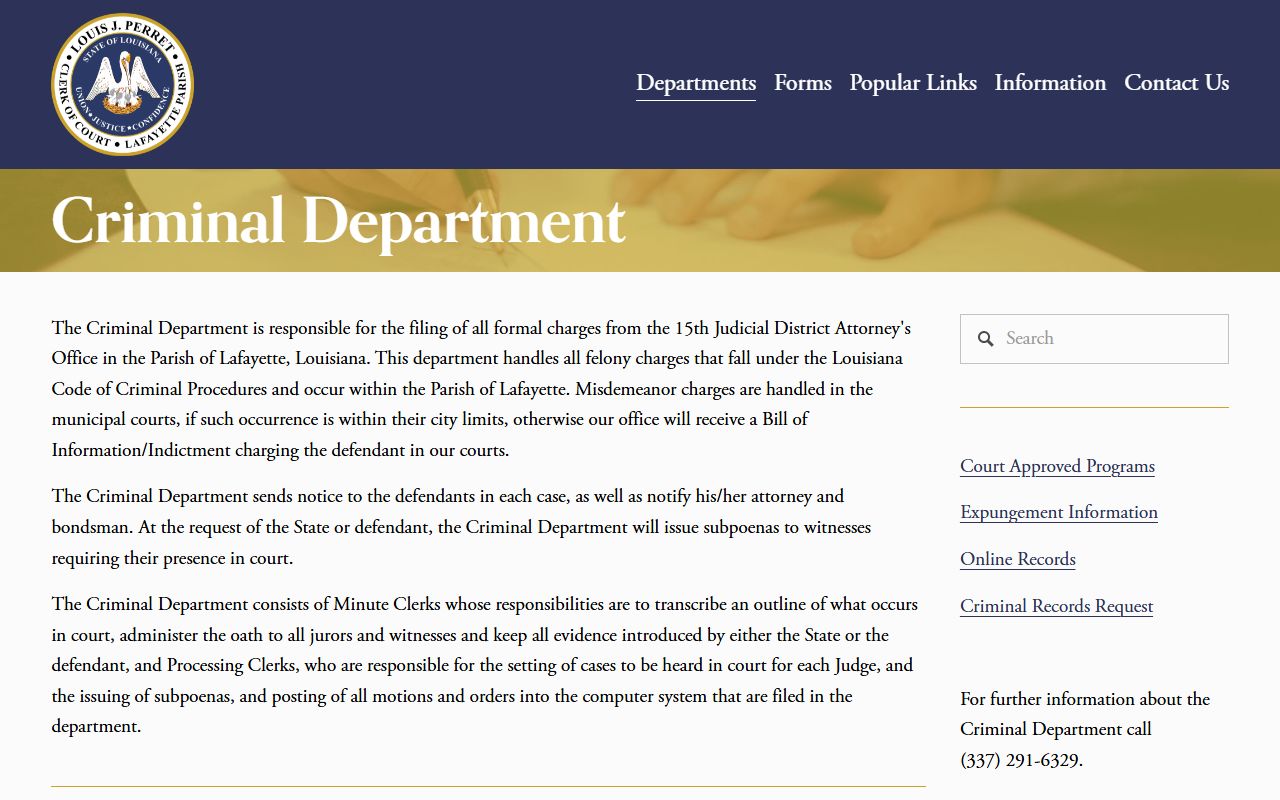
The Clerk criminal channel is central because the final case file is maintained through court records, even when the first public sign of the event was a booking entry.
Criminal case jurisdiction is split. The 15th Judicial District Court is the primary trial court for Lafayette Parish and handles district-level criminal matters, including felony prosecutions. Lafayette City Court handles state misdemeanors and Lafayette Consolidated Government ordinance violations within its territorial jurisdiction, plus traffic and juvenile matters listed by the court. Federal criminal prosecutions are separate and are searched through the U.S. District Court for the Western District of Louisiana and PACER.
Search Lafayette Parish Criminal Cases
Start with the court that likely handled the prosecution. For district-court criminal records, use the Clerk online records page and ClerkConnect subscription path, or contact Criminal Records at the Clerk. For City Court misdemeanors, traffic criminal matters, OWI, worthless checks, or ordinance cases, use the City Court case search and City Court phone menu. For federal cases, use PACER and the Western District of Louisiana federal court channel.
- Match the case to District Court, City Court, or federal court before searching by name.
- Use docket number if known. If not, search by defendant name in the correct official system.
- Review the filed charge, offense date, service, case history, minute entries, and disposition if available.
- Check whether the matter is pending, disposed, dismissed, amended, or sealed before treating a charge as final.
- Request certified copies from the Clerk or court when a disposition, sentence, or minute entry must be used formally.
The 15th Judicial District Attorney is the source lead-in for the image below.

The DA's office matters because arresting agencies submit reports, but the prosecution office decides which state criminal charges move forward in district-court cases.
Lafayette Parish Criminal Case Flow
A Lafayette Parish criminal case often begins outside the court record with an arrest or law-enforcement report. The court case begins when charges are filed or accepted into the court process. The DA may accept, refuse, amend, reduce, or dismiss charges in district-court prosecutions. City Court and municipal matters may involve city prosecution processes. Once the case is in court, each major step can create a docket event, minute entry, order, or disposition line.
Case flow: Charges Filed › Arraignment › Pretrial / Motions › Plea or Trial › Disposition › Sentencing
| Stage | What Happens |
|---|---|
| Charges filed | The prosecutor or court filing identifies the formal charge, which may differ from booking language. |
| Arraignment | The defendant appears, charges are addressed, and a plea may be entered. |
| Pretrial / motions | Attorneys file requests, service events occur, hearings are set, and minutes track court activity. |
| Plea or trial | The case may resolve by plea, trial verdict, dismissal, or another disposition. |
| Sentencing | The court enters jail, prison, probation, fine, bond, or other sentence-related terms if there is a conviction. |
Lafayette Parish Criminal Record Fields
Criminal court records show the case-level facts that matter after a prosecution is filed. They may include defendant name, case number, offense date, charge filed, case history, service, minutes, disposition, plea, sentence, probation, bond, warrants, court dates, judge or division, and attorney information. City Court records may also show violation, amended violation, fine, bond, sentence, probation, and court mandatory status. For custody status or current booking detail, use jail records separately.
| Field | What It Shows |
|---|---|
| Case or docket number | The criminal court file number used for lookup and copy requests. |
| Defendant | The person charged in the court case. |
| Offense date | The date tied to the alleged criminal event when available. |
| Charge filed | The formal criminal charge accepted or filed in court. |
| Case history | Events such as hearings, service, motions, continuances, and minute entries. |
| Plea | The defendant's formal answer to a charge when entered. |
| Disposition | The outcome, such as guilty, dismissed, acquitted, amended, or other court result. |
| Sentence and probation | Penalty terms after conviction, including custody, probation, fines, or other court orders. |
Charges vs Convictions
A filed charge is an accusation in court. A conviction is a final result based on a guilty plea, verdict, or other legally sufficient finding. Lafayette Parish criminal court records can show charges that were later amended, reduced, dismissed, or resolved without a conviction. That is why the disposition and sentence fields matter as much as the first charge line.
| Point | Charge | Conviction |
|---|---|---|
| Record stage | Appears after filing or court acceptance | Appears after plea, verdict, or final adjudication |
| Meaning | An allegation or prosecution count | A finding or plea establishing guilt |
| Can change | May be amended, reduced, dropped, or dismissed | May lead to sentence, probation, appeal, or expungement review |
| Best field to read | Charge filed and amended charge | Disposition, plea, judgment, and sentence |
Sealed vs Expunged Records
Restricted criminal court records require careful wording in Louisiana. A sealed record is restricted from public view by law or court order. An expunged record is removed from public access under Louisiana law, but it is not destroyed. Criminal-justice agencies and other agencies named by statute may still access expunged information. Juvenile criminal records are generally confidential under Louisiana Children's Code article 412, subject to exceptions.
The Louisiana expungement effect statute is the source lead-in for the image below.
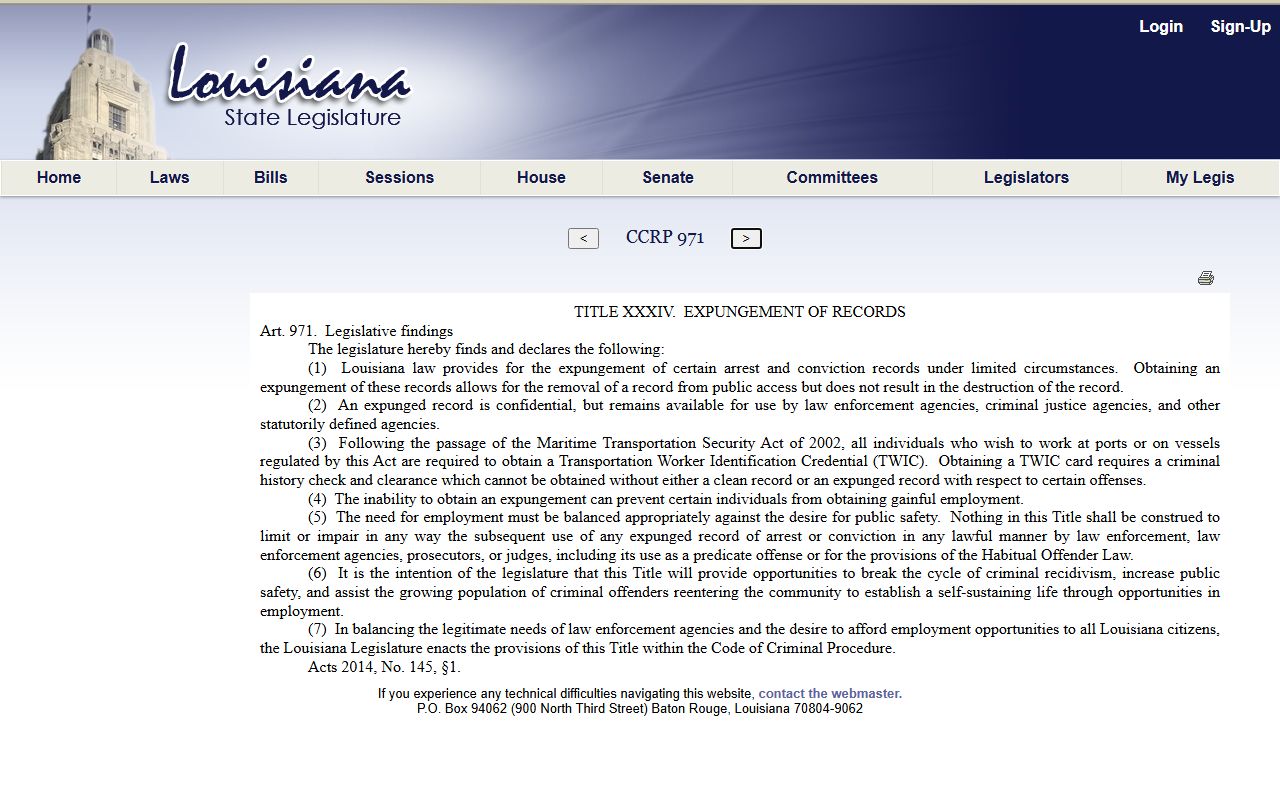
That statute supports the key local point: expungement limits public access, but it does not erase the record from every government system.
| Point | Sealed | Expunged |
|---|---|---|
| Public access | Blocked or limited by court order or law | Removed from public access under Louisiana procedure |
| Record status | The file still exists but is restricted | The file is not destroyed, even though public access is removed |
| Who may access | Depends on the sealing order and law | Criminal-justice agencies and certain agencies may still access it |
| Common examples | Protective orders, sensitive filings, sealed evidence, protected personal data | Eligible criminal events after a court grants expungement |
Lafayette Parish Criminal Record Limits
Louisiana's Public Records Act gives adults broad access to public records, but criminal court records can still be limited by sealing, expungement, juvenile confidentiality, adoption confidentiality, redaction rules, and active case orders. La. R.S. 44:31 covers the general right to inspect and copy public records. La. R.S. 44:32 covers custodian duties and written reasons when access is questioned.
The Louisiana juvenile-record confidentiality statute is the source lead-in for the image below.
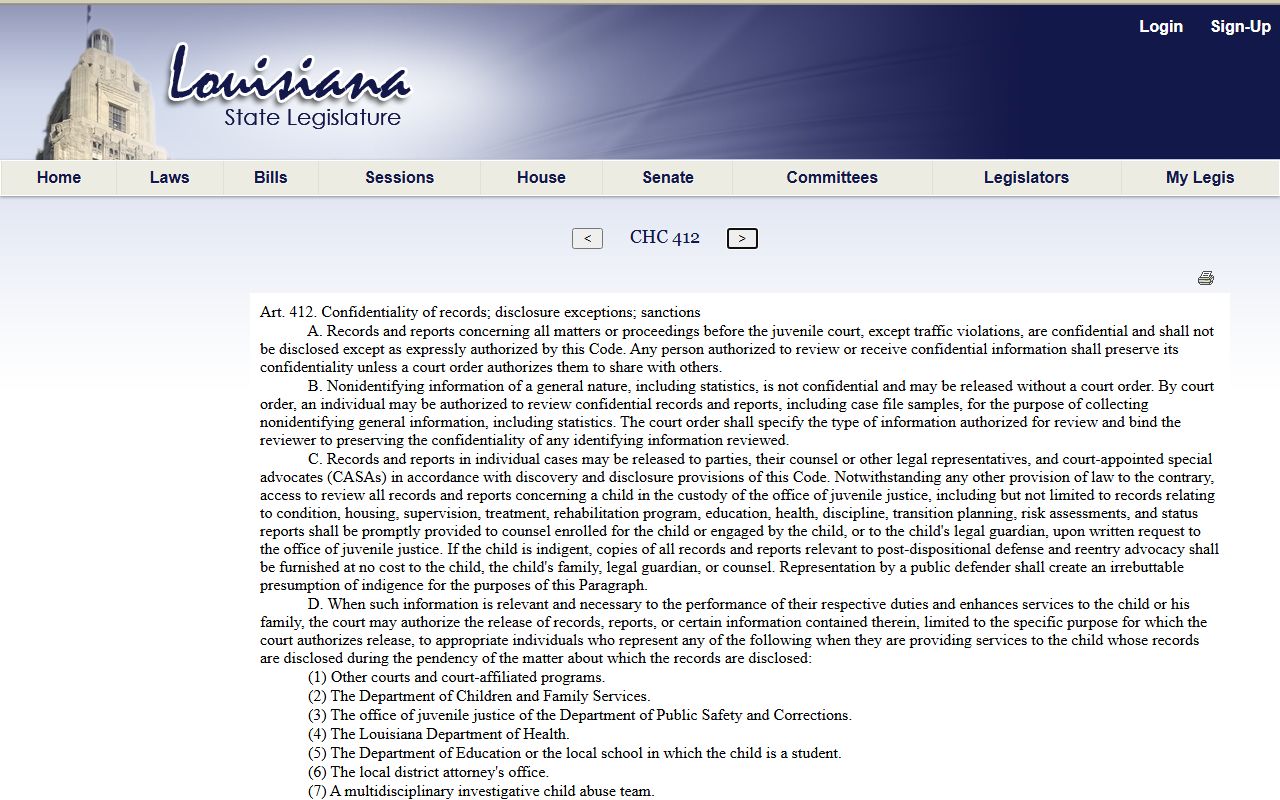
Juvenile confidentiality is one reason a name search may not return a public criminal court file even when a court process exists.
Note: Ask for the public portion or a certified disposition when a complete file is sealed, expunged, or partly redacted.
Lafayette Parish Federal Criminal Records
Federal criminal prosecutions in Lafayette are separate from parish court records. They are filed in the U.S. District Court for the Western District of Louisiana and searched through PACER or federal CM/ECF channels. Federal custody also differs from parish jail or state prison custody. Sentenced federal prisoners may be searched through the Bureau of Prisons, while local Lafayette Parish jail custody is handled through LPSO and the parish correctional center.
The Federal Bureau of Prisons inmate locator is the source lead-in for the image below.
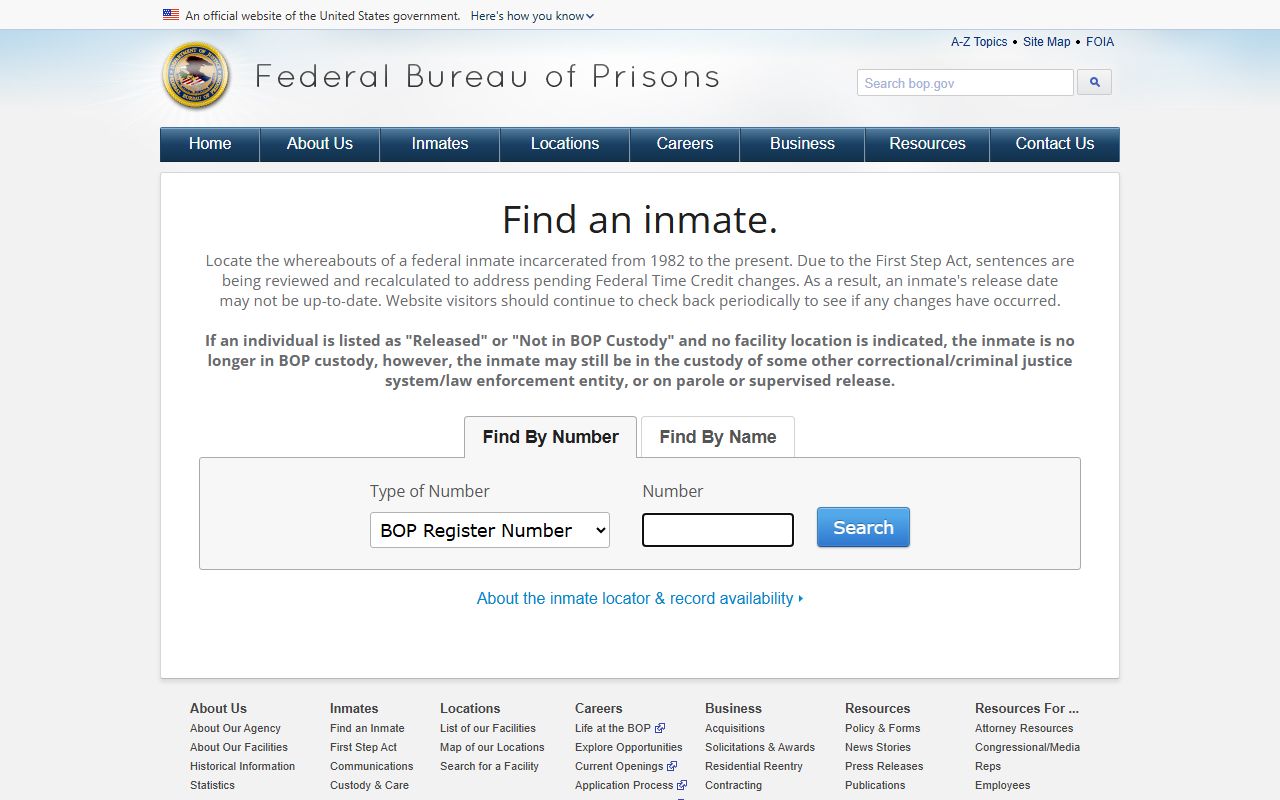
The federal locator is useful after federal sentencing or transfer, but it does not replace the Lafayette Parish criminal court record or local case docket.
Restricted Lafayette Criminal Court Records
Restricted Lafayette Parish criminal court records include juvenile matters, sealed cases, expunged records, active investigative material, protected addresses, minor information, Social Security numbers, financial account details, and case-specific protected filings. City Court juvenile matters and district juvenile-related files require extra care because public access rules are narrower than for ordinary adult criminal cases.
For a full case file, contact the Clerk criminal records department or the court that handled the case. For the arrest-to-charges path before final disposition, the separate Lafayette Parish arrest records and court charges discussion is more focused on booking charges, DA review, filed charges, and charge status.